Servitization in Manufacturing
Redefining Value Beyond Products
By: Destiny Dickerson
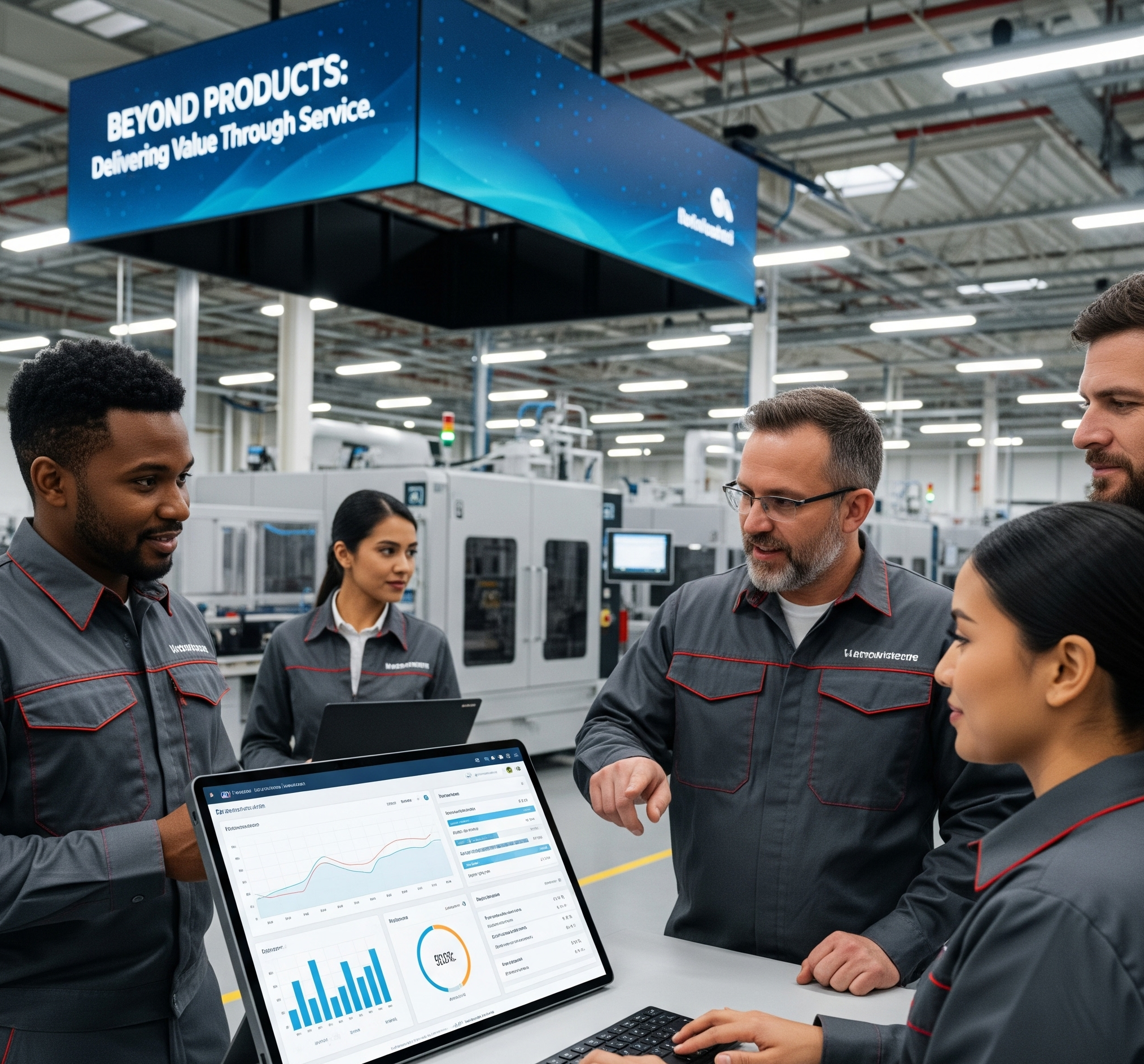
In today’s highly competitive global market, simply producing and selling high-quality goods is no longer enough to secure long-term success. Manufacturers are increasingly turning toward servitization, a business model that shifts the focus from selling standalone products to delivering value through integrated services. This transformation is reshaping the manufacturing industry by strengthening customer relationships, creating steady revenue streams, and driving innovation.
At its core, servitization means that manufacturers do not stop at delivering a physical product; they also provide services such as maintenance, repairs, upgrades, training, and even predictive monitoring. This approach ensures that customers receive ongoing support and reliability throughout the product’s lifecycle, while manufacturers benefit from closer engagement and recurring income.
One of the most notable examples of servitization is Rolls-Royce’s “Power by the Hour” model in the aerospace industry. Instead of selling aircraft engines as one-off products, Rolls-Royce provides airlines with engine services based on usage. The company takes responsibility for engine maintenance and performance, allowing airlines to focus on operations while Rolls-Royce secures predictable, long-term revenue. This not only boosts customer loyalty but also provides the company with valuable operational data to inform future designs.
Another example can be seen in the automotive industry. Companies such as Tesla integrate software updates into their vehicles long after purchase. These over-the-air upgrades enhance safety features, introduce new entertainment options, and improve battery performance. What once required buying a newer model can now be delivered as a service, keeping customers engaged and satisfied without requiring immediate replacement.
The industrial equipment sector has also embraced servitization. For instance, companies like Caterpillar offer advanced monitoring services that track equipment usage, predict maintenance needs, and optimize performance. This reduces downtime for customers in the construction and mining industries, while also allowing Caterpillar to strengthen its market position by ensuring that clients remain tied to its ecosystem of services and products.
The benefits of servitization extend beyond customer satisfaction. Manufacturers gain access to real-time data on how their products are used, uncovering insights into customer behavior and emerging needs. This knowledge feeds back into product development, making future designs more efficient, reliable, and customer-centered. In a world where customer expectations evolve rapidly, these insights provide a significant competitive advantage.
Servitization also builds resilience. During economic downturns or market disruptions, companies with service-based models often enjoy greater stability compared to those that rely solely on product sales. Recurring service contracts provide consistent income, buffering manufacturers against sudden drops in demand for new equipment or goods.
Of course, transitioning to a model with servitization presents challenges. It requires cultural change within organizations, as well as significant investments in digital technologies such as the Internet of Things (IoT), which connects machines and devices through data-sharing networks, and predictive analytics that anticipate customer needs. It also demands a strong commitment to long-term customer engagement. For many manufacturers, however, the rewards of loyal customers, recurring revenue, and continuous innovation far outweigh the risks.
Servitization is more than just an add-on to manufacturing; it represents a fundamental shift in how value is created and delivered. By blending products with tailored services, manufacturers are not only differentiating themselves in crowded markets but also shaping stronger, more sustainable business models for the future.
Sources
- Neely, A. (2009). “Exploring the Financial Consequences of the Servitization of Manufacturing.” Operations Management Research.
https://link.springer.com/article/10.1007/s12063-009-0015-5 - Rolls-Royce TotalCare® (power-by-the-hour model overview).
https://www.rolls-royce.com/media/our-stories/discover/2017/totalcare.aspx - Caterpillar - Cat® Equipment Management & Monitoring. https://www.cat.com/en_US/products/new/technology/equipment-management.html
- Tesla - Software Updates (official support page).
https://www.tesla.com/support/software-updates - Tesla - Over-the-Air Updates (Owner’s Manual reference).
https://www.tesla.com/ownersmanual/modely/en_us/GUID-A5A60CB3-7659-4B08-B2FD-AFD12C2D6EE1.html